Confused? Get All Answers Here
Stop Searching Everywhere — Your Complete Guide to Admissions, Courses, Careers, and the Future You Want
Choosing the next step in education is often exciting, but it can also become one of the most confusing periods in a student's life. Questions begin to appear from every direction. Friends discuss their plans, parents share suggestions, social media highlights trending careers, and educational institutions present countless opportunities.
Amid all these voices, students often find themselves asking one important question:
"What should I do next?"
For many students, uncertainty does not come from a lack of ambition. Instead, it comes from having too many choices and not enough clarity. Whether a student has just completed school, is preparing for higher education, or is considering a career change, making informed decisions becomes essential.
Confusion is common, but remaining confused for too long can delay opportunities. The purpose of guidance is not to tell students what they should become; rather, it is to help them understand themselves better and make decisions with confidence.
Why Do Students Experience Confusion During Admissions?
Modern education offers more opportunities than ever before. While this expansion creates possibilities, it also creates complexity.
Several factors contribute to uncertainty during the admission process.
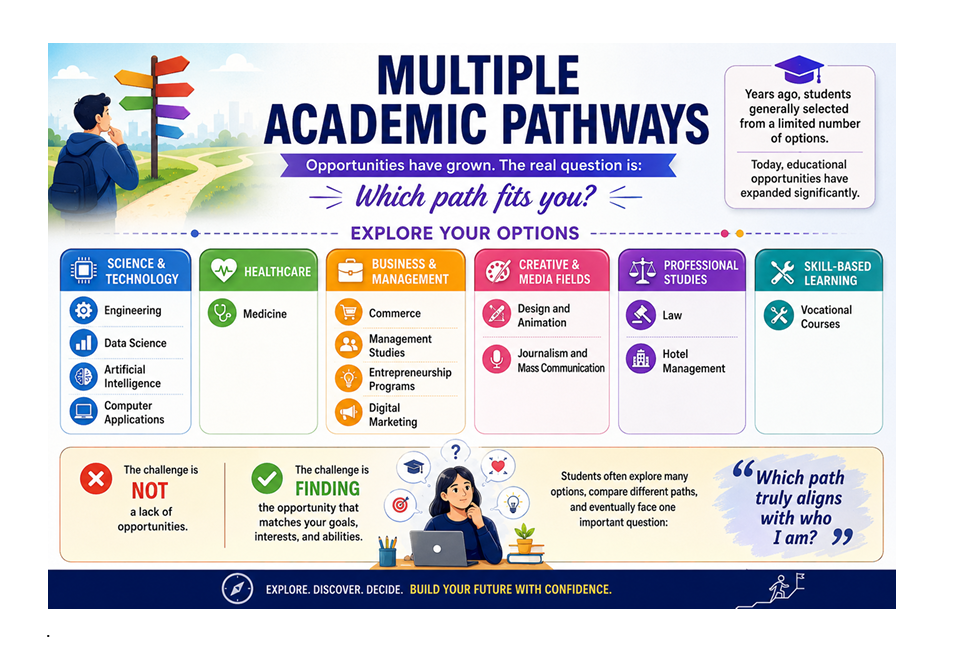
1. Multiple Academic Pathways
Students today can choose from a wide range of educational pathways. Traditional degree programs now exist alongside professional courses, diploma programs, certification programs, skill-based education, online learning platforms, and international study opportunities.
While more options create flexibility, they can also make decision-making difficult.
Students often wonder:
- Which course has the best future?
- Which stream is right for me?
- Should I choose a degree or a diploma?
- What career opportunities exist after graduation?
- Which college is best for my goals?
Without proper guidance, these questions can become overwhelming.
2. Information Overload Creates More Questions
The digital age provides students with unlimited information. Educational websites, social media content, videos, advertisements, and online discussions constantly offer advice.
Students encounter messages such as:
- "This course has huge demand."
- "This career pays the highest salary."
- "Choose this field because everyone is doing it."
After hearing multiple opinions, students frequently become uncertain because every source appears to suggest a different direction.
Too much information without proper understanding often creates confusion instead of clarity.
3. External Pressure Can Influence Decisions
Many students unintentionally make decisions based on expectations rather than personal interests.
Pressure can come from different sources.
Family Expectations
Parents naturally want the best future for their children. However, family expectations may sometimes influence decisions strongly.
While guidance is valuable, students should also consider their own interests, strengths, and goals before making final decisions.
Social Comparison
Students often compare themselves with friends and classmates.
Questions such as these become common:
- My friends selected science. Should I do the same?
- Everyone is preparing for engineering entrance examinations. Am I making the wrong choice?
- What if I fall behind others?
Comparison creates unnecessary pressure and can affect confidence.
Fear of Making Mistakes
Some students avoid making decisions because they fear choosing the wrong path.
However, uncertainty should not stop progress. Every successful journey involves learning, adapting, and improving over time.
Questions Every Student Should Ask Before Choosing a Course
Choosing a career or educational path should involve self-analysis and thoughtful planning.
Before making any admission decision, students should ask themselves the following questions:
- What subjects interest me the most?
- What are my strengths and abilities?
- What type of work environment do I prefer?
- What career opportunities exist in this field?
- Will this course support my long-term goals?
- Am I choosing this path for myself or because of external pressure?
These questions help students move from confusion toward clarity.
A Step-by-Step Approach to Better Admission Decisions
Making informed choices requires a structured and practical approach.
Step 1: Conduct Detailed Research
Students should gather information from reliable educational sources before selecting any course or institution.
Research areas should include:
- Course curriculum and syllabus
- Eligibility requirements
- Duration of study
- Fee structure
- Entrance examinations
- Placement opportunities
- Industry demand
- Career growth potential
Research creates confidence and reduces uncertainty.
Step 2: Compare Different Options
Instead of selecting immediately, compare available opportunities carefully.
| Factor | Question to Consider |
|---|---|
| Course | Does it match my interests and strengths? |
| College | Is it recognized and reputable? |
| Fees | Is it financially manageable? |
| Placements | What opportunities are available after graduation? |
| Future Growth | Does the industry show long-term demand? |
Comparisons often make decisions easier and more logical.
Step 3: Seek Guidance
Students should never hesitate to ask questions when they feel uncertain.
Useful sources of guidance include:
- Teachers
- Career counselors
- Senior students
- Parents
- Industry professionals
- College representatives
Seeking advice does not indicate weakness; it demonstrates responsibility and maturity.
Common Mistakes Students Must Avoid
Students often make avoidable errors while selecting courses, colleges, or careers.
- Following trends without understanding them
- Choosing only based on salary expectations
- Ignoring personal interests and strengths
- Making last-minute decisions
- Relying only on social media advice
- Not researching colleges properly
- Allowing fear to control decisions
Avoiding these mistakes can improve both confidence and future outcomes.
How to Move from Confusion to Confidence
The journey toward a successful future begins with understanding yourself.
Students who spend time exploring their interests, learning about opportunities, researching courses, and seeking guidance often make better decisions.
Confidence is not created by having all the answers immediately. Confidence grows when students gather information, evaluate options carefully, and trust their ability to make informed choices.
Success Begins with Clarity
Every successful professional once experienced uncertainty. Doctors, engineers, entrepreneurs, designers, teachers, writers, and business leaders all faced moments when they questioned their future.
The difference was not that they had all the answers immediately; the difference was that they continued exploring, learning, asking questions, and moving forward.
Being confused about admissions, courses, or career choices is not unusual. In fact, confusion often appears when important decisions need to be made.
Instead of focusing on choosing what everyone else chooses, focus on understanding who you are, what you enjoy, what you want to achieve, and which path aligns with your goals.
The future is not built by random decisions. It is built through informed choices, preparation, and confidence.
Your answers may not appear overnight, but every question you ask today brings you closer to the future you want tomorrow.
Final Thoughts
If you are feeling confused about admissions, colleges, courses, careers, or future opportunities, remember that confusion is temporary. The right information, proper guidance, and thoughtful planning can transform uncertainty into confidence.
Keep exploring, keep learning, and keep moving forward.
Your future starts with one decision, and that decision begins with understanding yourself.