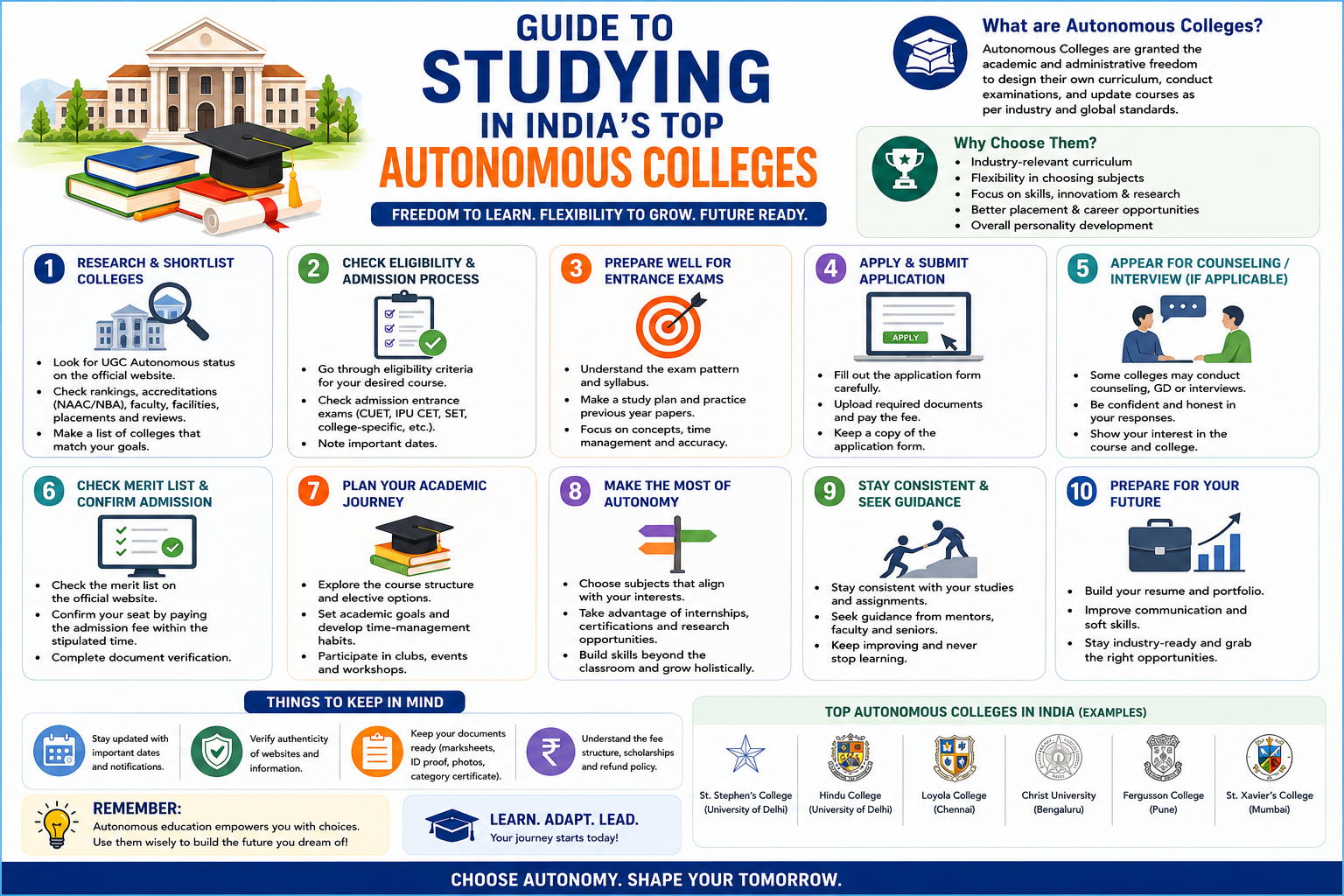
Guide to Studying in India's Top Autonomous Colleges
Everything Students Need to Know About Autonomous Colleges, Admissions, Academics, and Career Opportunities
Choosing the right college is one of the most important decisions in a student's educational journey. While many students focus on university rankings and popular courses, another factor that deserves attention is whether a college is autonomous.
Over the last few years, autonomous colleges have gained significant popularity across India due to their academic flexibility, industry-oriented curriculum, modern teaching methods, and focus on skill development.
Many of India's top institutions operate under autonomous status, providing students with an educational experience that often goes beyond traditional university systems.
If you are planning your higher education journey, understanding autonomous colleges can help you make a more informed decision about your future.
What Is an Autonomous College?
An autonomous college is an institution that has been granted academic autonomy by the University Grants Commission (UGC) while remaining affiliated with a parent university.
Autonomous status allows colleges to design their own curriculum, conduct examinations, update syllabi, and implement innovative teaching methods while following guidelines established by educational authorities.
The degree is generally awarded by the affiliated university, but the academic management is handled by the autonomous college itself.
Why Autonomous Colleges Are Becoming Popular
Traditional university systems often take time to update course structures and adopt new industry requirements. Autonomous colleges have greater flexibility to introduce modern subjects, emerging technologies, and skill-based learning opportunities.
This flexibility helps students remain aligned with current industry demands and future career opportunities.
Key advantages include:
- Updated curriculum
- Industry-focused education
- Flexible examination systems
- Better academic innovation
- Improved practical learning
- Stronger placement opportunities
- Greater focus on skill development
How Autonomous Colleges Differ from Regular Colleges
| Factor | Autonomous Colleges | Regular Affiliated Colleges |
|---|---|---|
| Curriculum Design | Designed by the college | Determined by the university |
| Examinations | Conducted by the college | Conducted by the university |
| Syllabus Updates | Frequent and flexible | Often slower |
| Industry Integration | Higher | Moderate |
| Skill-Based Courses | More common | Limited flexibility |
| Academic Innovation | High | Dependent on university policies |
Benefits of Studying in an Autonomous College
1. Updated Curriculum
One of the biggest advantages of autonomous colleges is their ability to revise course structures according to industry requirements.
Students gain exposure to modern subjects, emerging technologies, and practical applications that may not yet be included in traditional university syllabi.
2. Better Industry Exposure
Many autonomous institutions collaborate with industries, companies, and professionals to enhance learning experiences.
Students often benefit from:
- Industry workshops
- Guest lectures
- Live projects
- Internships
- Corporate training programs
3. Flexible Learning Environment
Autonomous colleges can introduce innovative teaching methods and elective courses that allow students to customize their learning journey.
This flexibility helps students explore interdisciplinary interests and specialized career paths.
4. Strong Focus on Practical Skills
Employers increasingly seek candidates with practical knowledge and workplace skills.
Autonomous colleges often include:
- Project-based learning
- Laboratory work
- Industry assignments
- Research activities
- Skill development programs
5. Improved Placement Opportunities
Many top autonomous colleges maintain strong relationships with recruiters and industry partners.
As a result, students may have access to:
- Campus placements
- Internship opportunities
- Career development programs
- Professional networking opportunities
Popular Courses Offered by Autonomous Colleges
Autonomous colleges offer a wide variety of undergraduate and postgraduate programs.
Engineering and Technology
- Computer Science Engineering
- Information Technology
- Mechanical Engineering
- Electronics Engineering
- Artificial Intelligence
- Data Science
Commerce and Management
- B.Com
- BBA
- MBA
- Financial Management
- Business Analytics
Science Programs
- B.Sc Physics
- B.Sc Chemistry
- B.Sc Biotechnology
- B.Sc Data Science
- M.Sc Programs
Arts and Humanities
- Psychology
- Political Science
- Economics
- English Literature
- Sociology
How Admissions Work in Autonomous Colleges
The admission process varies depending on the institution and course.
Common admission methods include:
- Merit-based admissions
- Entrance examinations
- University-level counseling
- State-level admission procedures
- Institution-specific admission processes
Students should regularly check official college websites for updated admission guidelines and deadlines.
What Students Should Look for Before Choosing an Autonomous College
Not all autonomous colleges are the same. Students should evaluate several factors before making a final decision.
Accreditation and Recognition
Verify that the institution is recognized by appropriate educational authorities.
Check:
- UGC Recognition
- NAAC Accreditation
- NBA Accreditation (if applicable)
Placement Record
Review recent placement statistics, recruiter participation, and internship opportunities.
Faculty Quality
Qualified and experienced faculty members contribute significantly to the learning experience.
Infrastructure
Modern facilities support effective learning.
Important facilities include:
- Laboratories
- Libraries
- Computer Centers
- Research Facilities
- Sports Infrastructure
Industry Partnerships
Colleges with strong industry connections often provide better exposure and career opportunities.
Challenges Students May Face
While autonomous colleges offer many benefits, students should also understand potential challenges.
- Academic expectations may be higher
- Continuous assessments can require consistent effort
- Frequent curriculum updates may increase workload
- Practical projects require active participation
However, these challenges often contribute positively to skill development and professional readiness.
Top Skills Students Should Develop While Studying
Success in autonomous colleges depends not only on academic performance but also on skill development.
Students should focus on:
- Communication Skills
- Critical Thinking
- Problem Solving
- Teamwork
- Leadership
- Digital Literacy
- Research Skills
- Time Management
These skills significantly improve employability and long-term career growth.
Common Mistakes Students Should Avoid
- Choosing a college only based on popularity
- Ignoring accreditation status
- Not reviewing placement records
- Overlooking curriculum quality
- Failing to explore industry opportunities
- Ignoring skill development activities
A well-informed decision can make a significant difference in your educational experience and future career.
Future Opportunities After Graduating from an Autonomous College
Graduates from autonomous colleges often pursue a variety of pathways.
- Corporate Careers
- Government Jobs
- Higher Education
- Research Programs
- Entrepreneurship
- International Studies
- Professional Certifications
The combination of academic knowledge and practical skills often helps students compete effectively in both national and global job markets.
Conclusion
Autonomous colleges represent an evolving approach to higher education in India. Their ability to adapt curricula, promote practical learning, and integrate industry requirements makes them attractive options for students seeking modern educational experiences.
While choosing a college, students should look beyond reputation and carefully evaluate accreditation, faculty quality, placements, infrastructure, and academic flexibility.
The right autonomous college can provide not only a degree but also the skills, confidence, and opportunities needed to succeed in today's competitive world.