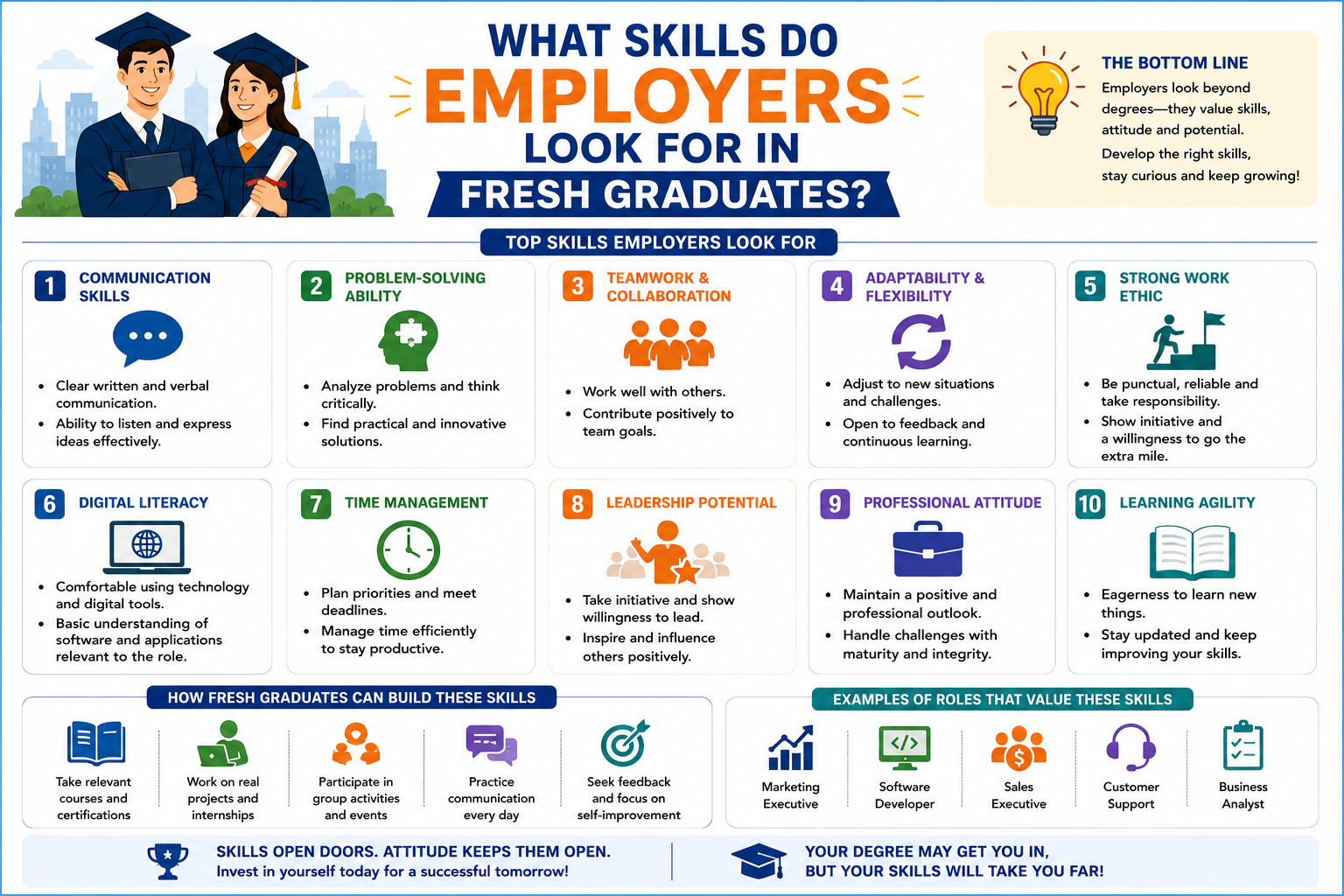
What Skills Do Employers Look for in Fresh Graduates?
More Than Just a Degree: The Skills That Help You Stand Out
Graduating from college is an exciting milestone. After years of studying, assignments, projects, and examinations, students begin preparing for the professional world. However, today's employers are looking for much more than academic qualifications.
While a degree remains important, organizations increasingly seek candidates who possess practical skills, adaptability, professionalism, and the ability to contribute effectively from day one.
The modern workplace is evolving rapidly due to technological advancements, digital transformation, globalization, and changing business requirements. As a result, fresh graduates who develop a combination of technical expertise and professional skills often have a significant advantage in the job market.
So, what exactly are employers looking for? Let's explore the skills that can help fresh graduates stand out and build successful careers.
Why Skills Matter More Than Ever
Employers today operate in highly competitive and fast-changing environments. They need employees who can learn quickly, solve problems, communicate effectively, and adapt to new situations.
While academic knowledge provides a foundation, practical skills determine how successfully a graduate performs in the workplace.
Companies often prefer candidates who demonstrate:
- Strong communication abilities
- Problem-solving skills
- Technical knowledge
- Teamwork and collaboration
- Professional attitude
- Adaptability and willingness to learn
Top Skills Employers Look for in Fresh Graduates
1. Communication Skills
Communication remains one of the most important skills employers seek in candidates.
Employees need to communicate clearly with colleagues, managers, clients, and customers.
Important Areas:
- Verbal Communication
- Written Communication
- Presentation Skills
- Professional Email Writing
- Listening Skills
Strong communication improves teamwork, productivity, and workplace relationships.
2. Problem-Solving Ability
Organizations value employees who can identify challenges, analyze situations, and develop practical solutions.
Problem-solving skills demonstrate critical thinking and decision-making abilities.
Examples:
- Resolving customer issues
- Improving processes
- Finding efficient solutions
- Managing unexpected situations
3. Teamwork and Collaboration
Most workplaces require employees to work with others. Employers want graduates who can contribute positively within a team environment.
Effective teamwork involves:
- Respecting different opinions
- Supporting colleagues
- Sharing responsibilities
- Working toward common goals
4. Adaptability and Flexibility
The business world changes rapidly. New technologies, processes, and market conditions require employees to adapt continuously.
Graduates who are open to learning and adjusting to change are highly valued.
Employers Appreciate Candidates Who:
- Learn new skills quickly
- Accept feedback positively
- Adapt to new tools and technologies
- Handle changing responsibilities
5. Technical Skills
Technical knowledge remains important in many industries. Employers often expect candidates to possess at least basic industry-relevant technical skills.
Examples include:
- Computer Proficiency
- Microsoft Office Skills
- Data Analysis
- Programming Knowledge
- Digital Marketing Skills
- Industry-Specific Software
6. Time Management
Employers value individuals who can manage their workload effectively and meet deadlines.
Good time management helps employees:
- Prioritize tasks
- Increase productivity
- Reduce stress
- Deliver quality work on time
7. Leadership Potential
Even entry-level employees can demonstrate leadership qualities.
Leadership is not only about managing people. It includes:
- Taking initiative
- Being responsible
- Motivating others
- Showing accountability
- Making informed decisions
Employers often look for future leaders within their workforce.
8. Critical Thinking
Critical thinking helps employees evaluate information objectively and make logical decisions.
Graduates with strong analytical abilities can:
- Assess situations effectively
- Identify opportunities
- Reduce risks
- Make better decisions
9. Digital Literacy
In today's digital economy, basic digital skills are essential regardless of the industry.
Important digital competencies include:
- Using productivity tools
- Online collaboration platforms
- Cloud-based software
- Digital communication tools
- Basic cybersecurity awareness
10. Emotional Intelligence
Emotional intelligence helps employees understand and manage emotions while interacting effectively with others.
Key components include:
- Self-awareness
- Empathy
- Relationship management
- Conflict resolution
- Professional behavior
Skills vs Degree: What Matters More?
A degree helps candidates qualify for opportunities, but skills often determine long-term success.
| Degree | Skills |
|---|---|
| Provides academic knowledge | Provides practical workplace capability |
| Helps secure interviews | Helps secure job offers |
| Shows educational achievement | Demonstrates professional readiness |
| Required for many careers | Required for career growth |
The most successful candidates combine both strong academic qualifications and practical skills.
How Fresh Graduates Can Develop These Skills
- Participate in internships
- Work on real-world projects
- Take online certification courses
- Join student organizations
- Practice public speaking
- Build a professional portfolio
- Learn industry-relevant software
- Seek mentorship and guidance
Continuous learning significantly improves employability.
Common Mistakes Fresh Graduates Should Avoid
- Relying only on academic marks
- Ignoring communication skills
- Avoiding practical experience
- Not learning new technologies
- Lack of professionalism
- Poor interview preparation
- Failing to build a portfolio
Conclusion
The modern workplace requires much more than academic qualifications. Employers seek graduates who combine technical knowledge with communication, adaptability, teamwork, problem-solving, and professional skills.
Students who invest in developing these abilities during their educational journey often enjoy better career opportunities and faster professional growth.
A degree may open the door, but your skills determine how far you go. Focus on continuous learning, practical experience, and personal development to build a successful career.